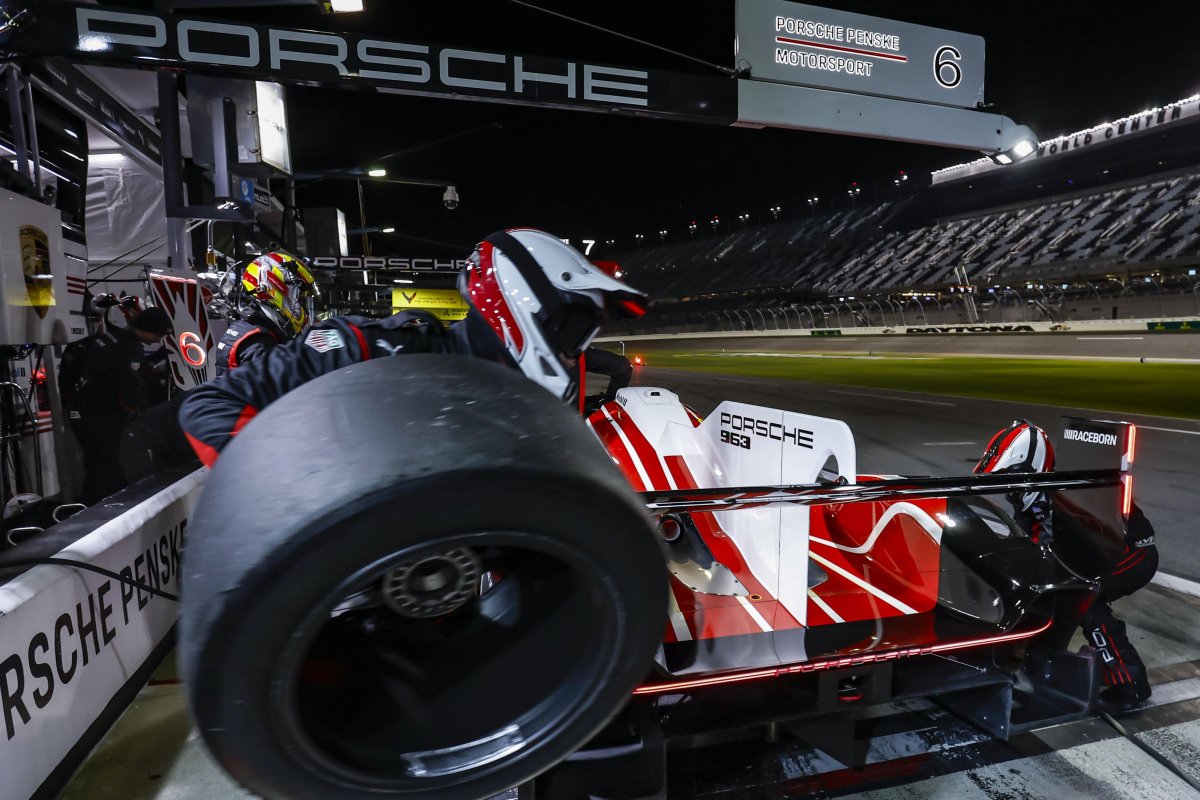
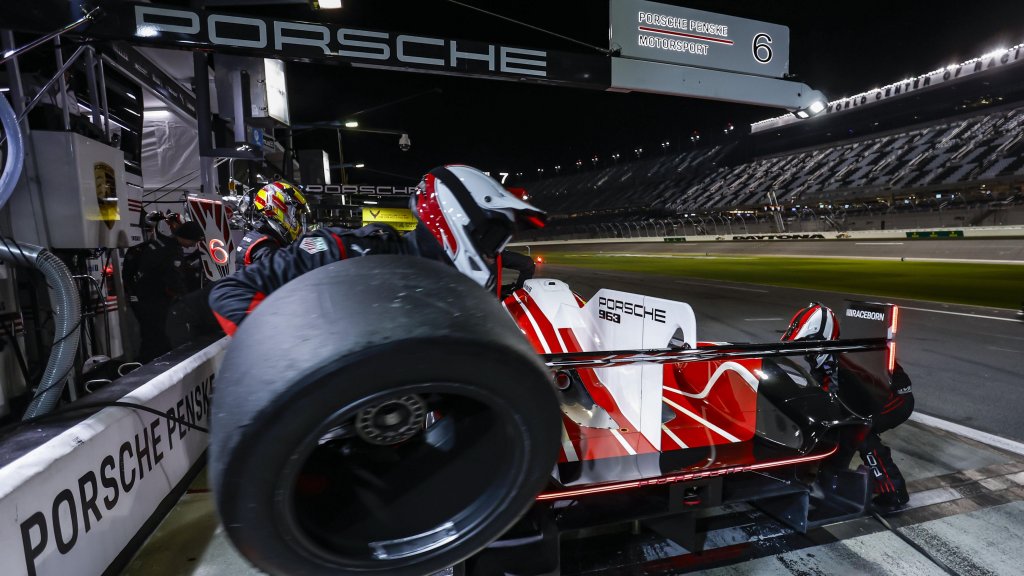
Photo Courtesy of Porsche
ATLANTA – January 22, 2025 – Porsche Penske Motorsport is gearing up for an intense start to the 2025 IMSA WeatherTech SportsCar Championship at the iconic 24 Hours of Daytona this weekend (January 25-26). Defending their championship title, the team is set to field two Porsche 963 hybrid prototypes, each boasting 707 PS (520 kW), in pursuit of victory at the Daytona International Speedway.
Known as the “World Center of Racing,” Daytona’s 3.56-mile course combines high-speed sections on the 2.5-mile NASCAR oval with tight, technical infield corners. These contrasting demands require teams to strike a delicate balance between aerodynamic efficiency and mechanical grip, posing unique challenges for engineers and drivers alike.
“Daytona demands an unusual compromise in vehicle setup that would not work at many other tracks,” said Brandon Fry, Porsche Penske Motorsport’s Lead Race Engineer. “While the oval sections push us to achieve unparalleled top speeds, the infield requires maximum braking performance, downforce, and traction.”
Reigning IMSA champion Felipe Nasr, who secured victory at Daytona last year, emphasized the critical nature of balancing speed and stability. “A car well-suited for the slower sections also improves tire durability because you’re sliding around less. That’s where lap time is made, not on the straights,” he explained.
Managing the Tire Puzzle
Daytona’s dramatic temperature shifts add another layer of complexity to the 24-hour marathon. With asphalt temperatures peaking above 100°F in the daytime and plummeting after nightfall, teams must carefully manage their tire strategy.
Porsche’s tire partner, Michelin, provides two compounds for the GTP class: a medium option for warmer conditions and a softer compound for cooler temperatures. While soft tires warm up quickly and offer superior grip, they degrade faster over long stints, requiring teams to weigh performance gains against durability.
“Drivers who can quickly exploit the tire’s potential on the out-lap have a clear advantage,” said Nasr. “But situational awareness is critical when rejoining the track amidst traffic from slower classes.”
Navigating Daytona’s Traffic Challenges
With 61 cars competing across four classes, including the top-tier GTP prototypes and Porsche’s four 911 GT3 R entries in the GT categories, traffic management will be pivotal. Spotters play a crucial role, guiding drivers through congested sections with real-time calls from the grandstand roof.
Nasr highlighted the importance of experience in navigating Daytona’s crowded high-speed oval. “Drivers who’ve raced here before know when it’s wise to back off. It’s not always about full attack,” he said, noting that overtaking slower GT cars in the banking requires split-second decisions.
As Porsche Penske Motorsport readies its hybrid prototypes for the season opener, the team’s meticulous preparation underscores the challenges of competing at one of endurance racing’s most demanding circuits.
 Super Car Studios